
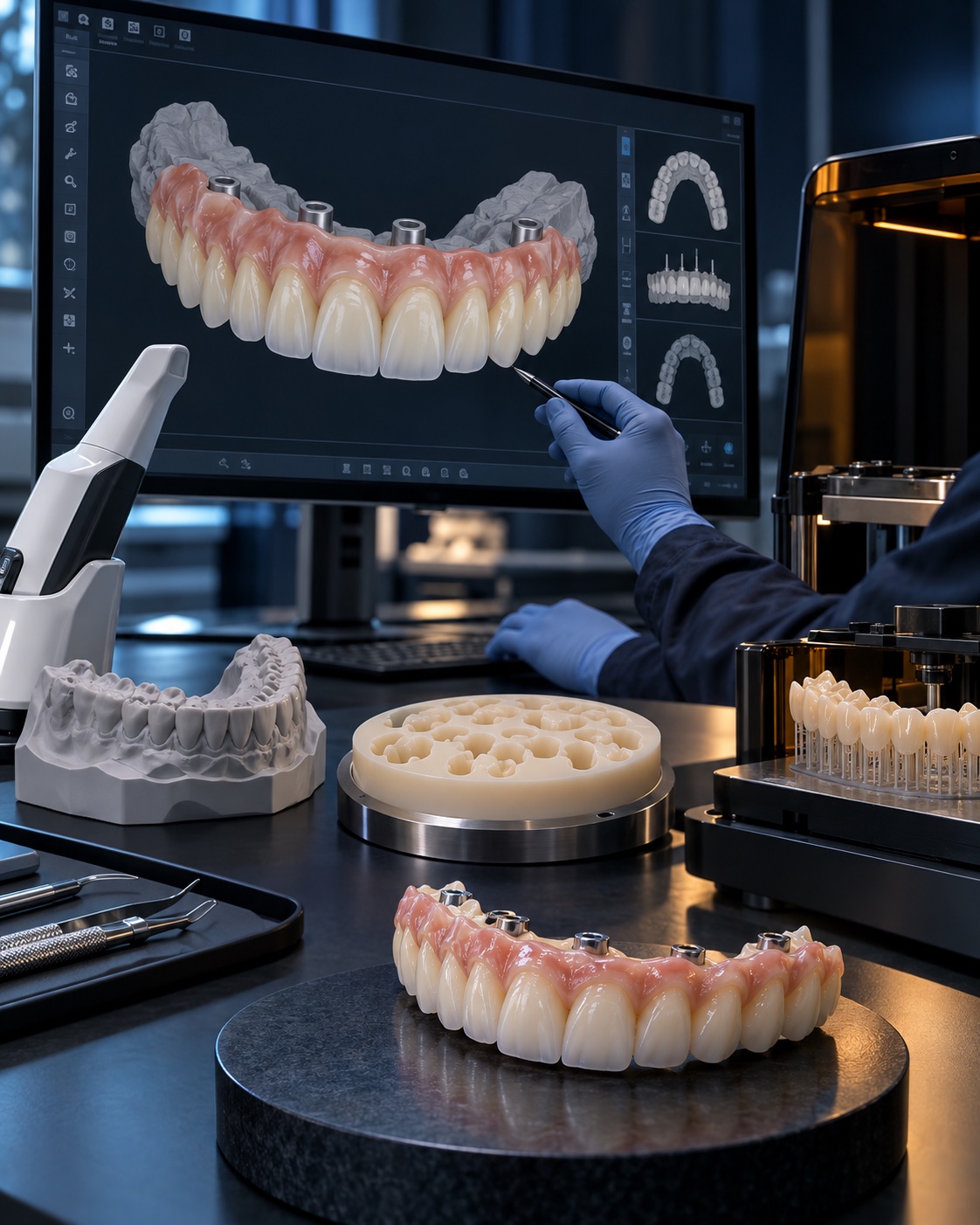
Digital dentistry can shorten transmission time, but a fast file transfer does not make a case complete. The useful unit of work is a decision-ready case: the technician can see the prescription, usable records, and the limits of the requested restoration without guessing.
1. Make the clinical intent explicit
Start with the treating dentist’s prescription: tooth or site, restoration type, material choice, margin and contact preferences, shade, delivery date, and anything the lab should not infer. For implant work, include the platform, scan body and component information. The dentist owns clinical indication and final approval; the technician should flag uncertainty rather than silently substitute a material or design.
2. Check the record before design starts
- Is the preparation or scan complete enough to identify the margin and adjacent anatomy?
- Are opposing arch and bite records usable for the requested design?
- Are shade references, photographs, and stump information present when esthetics matter?
- Does the file naming make the patient, tooth, version, and prescription easy to match?
A missing record should trigger a specific question, such as “Can you rescan the distal margin of #19?” A general “bad scan” message creates another round trip.
3. Put exceptions on a shared timeline
Record who asked the question, what was decided, and which design version was approved. A simple status sequence—received, records review, design, approval if needed, production, QC, dispatched—helps the practice know when a change is still feasible. Faster turnaround comes from fewer interrupted starts, not only a faster mill.
The DentBridge handoff principle
For every case, make the next decision visible to the next person. A clear intake and approval trail gives technicians more time for design and finishing, while the dentist stays in control of patient-specific choices.